October 25, 2026 · 6 min read · Shades
Planning motorized shades, window by window
A shade project is a set of small projects, one for each window. What we decide at every opening before anything is ordered, and when.
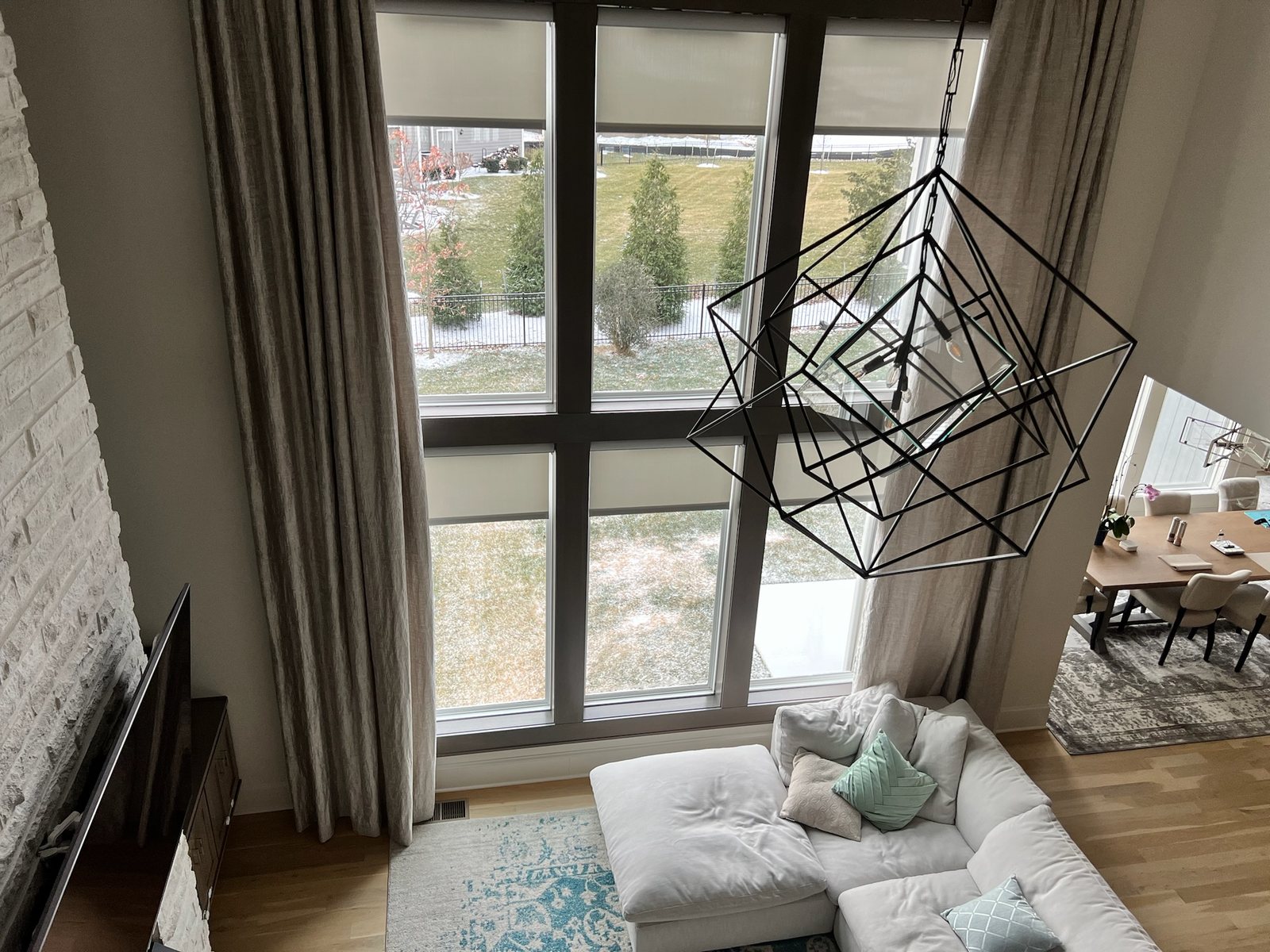
The short answer. IntegrateIT plans and installs motorized shades across Kansas City, Missouri and the Johnson County suburbs, from our showroom in Overland Park, as a Lutron Certified Dealer. Before anything is ordered, we settle five things at every window: whether a wire can reach it, where the roll goes when the shade is up, which fabric faces which sun, how it mounts and where it stops, and what moves it. Each window gets one line in a shade schedule, and the schedule is what gets priced and ordered.
Every shade job we take on starts with a survey and ends in a schedule: one line for every window, and nothing ordered until every line is filled in. That is the whole method. The rest of this piece is what goes on each line, and why one answer for the whole house is wrong in at least one room. The photos are from our own jobs around Kansas City.
One line per window
A house has windows facing four directions, windows a wire can reach and windows it can’t, a primary bedroom and a family room. So the schedule asks the same five questions of every opening:
| On the line | The choices | What decides it |
|---|---|---|
| The drive | Wired, or battery | Whether a wire can reach the head of that window |
| The roll | A pocket, a fascia, or exposed hardware | Whether the ceiling is still open, and the roll’s size |
| The fabric | Blackout, or an openness from tight to open | The room, and which way the glass faces |
| The mount | Inside or outside the frame; side channels or not | The jamb depth, and how dark the room must get |
| The control | Which scenes, keypads and schedules move it | How the room is used, morning to night |
1. Can a wire reach the head of this window?
This is the first question because it decides the others. A wired Lutron Sivoia QS drive gets a low-voltage run to the head of the window, and from then on the shade is a fixture: no batteries and no ladder. A battery drive, Lutron Triathlon, is the right answer where no run is possible: a finished plaster wall, stone, a two-story opening with nothing above it. Battery shades work well. They are a maintenance commitment you choose on purpose.
In a new build the answer is simple: pull power to the head of every window that might ever get a shade, even if shades are a later decision. It is the cheapest line on the whole project before drywall and one of the most expensive after it. (The pre-wire checklist, room by room.)
2. Where does the roll go when the shade is up?
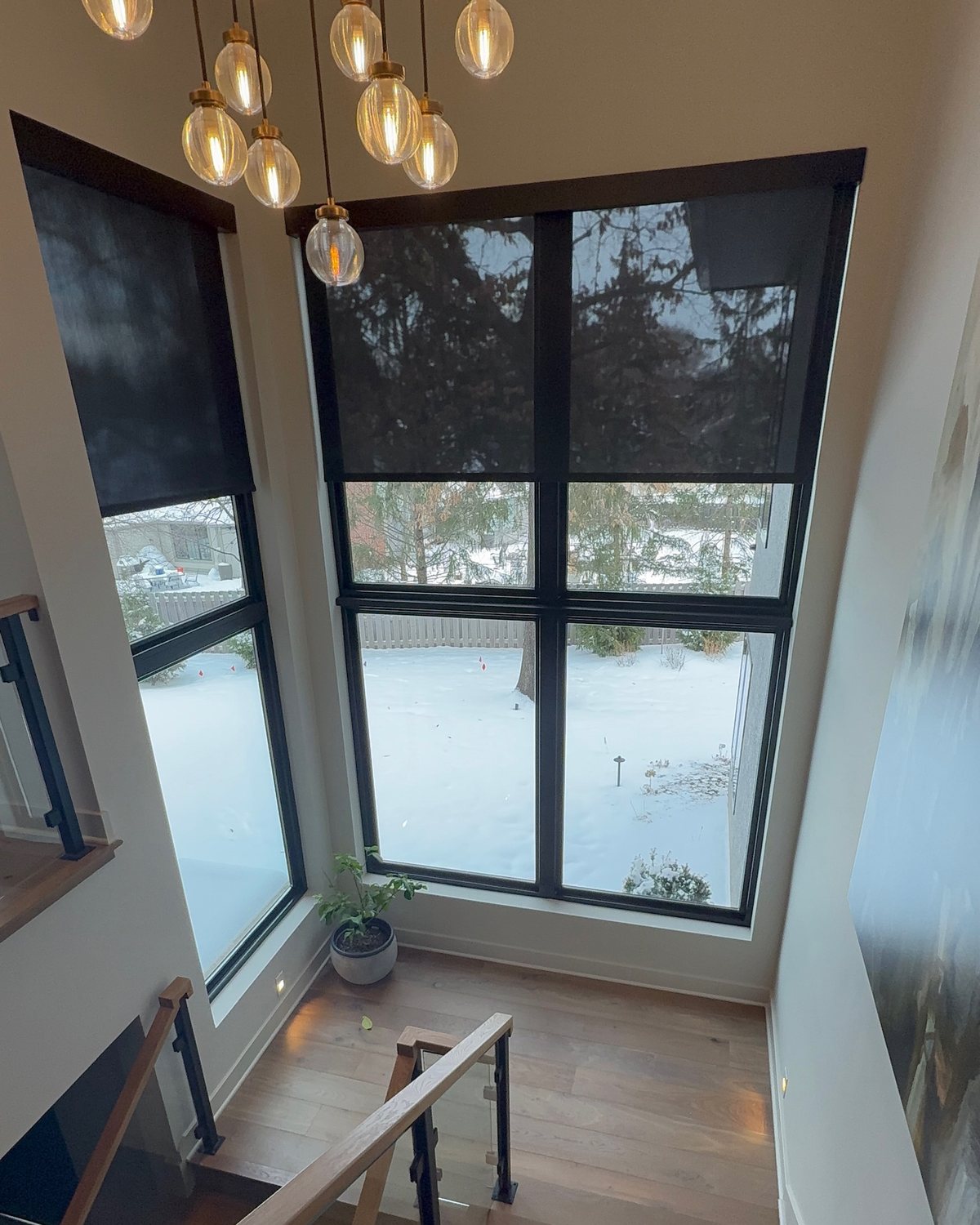
There are three honest answers. A pocket is a recess framed into the ceiling, so the open shade disappears. It has to be framed to a size that comes off the schedule, because the roll’s diameter depends on the fabric and the height of the shade. A fascia is a finished cover in front of the roller: visible, but deliberate, and the usual answer in a finished house. Exposed hardware is what Lutron Palladiom is designed for, where the roller and brackets are part of the room.
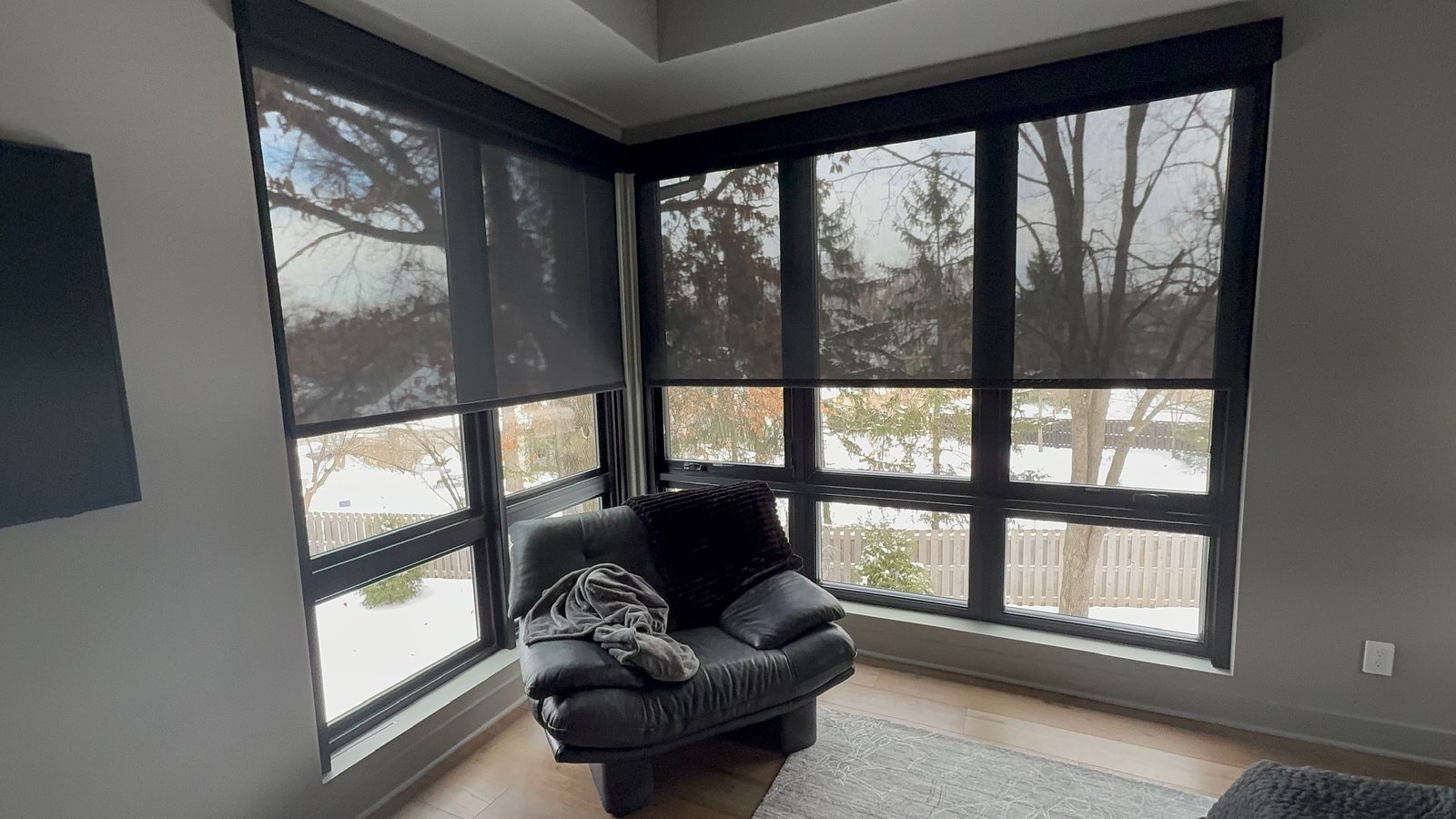
In a finished house the fascia is sized to sit under whatever is already there, a drapery track or a crown. Where two windows meet at a corner, the two fascias have to meet cleanly too. That is decided on the schedule, not on the ladder.
3. Which fabric faces which sun?
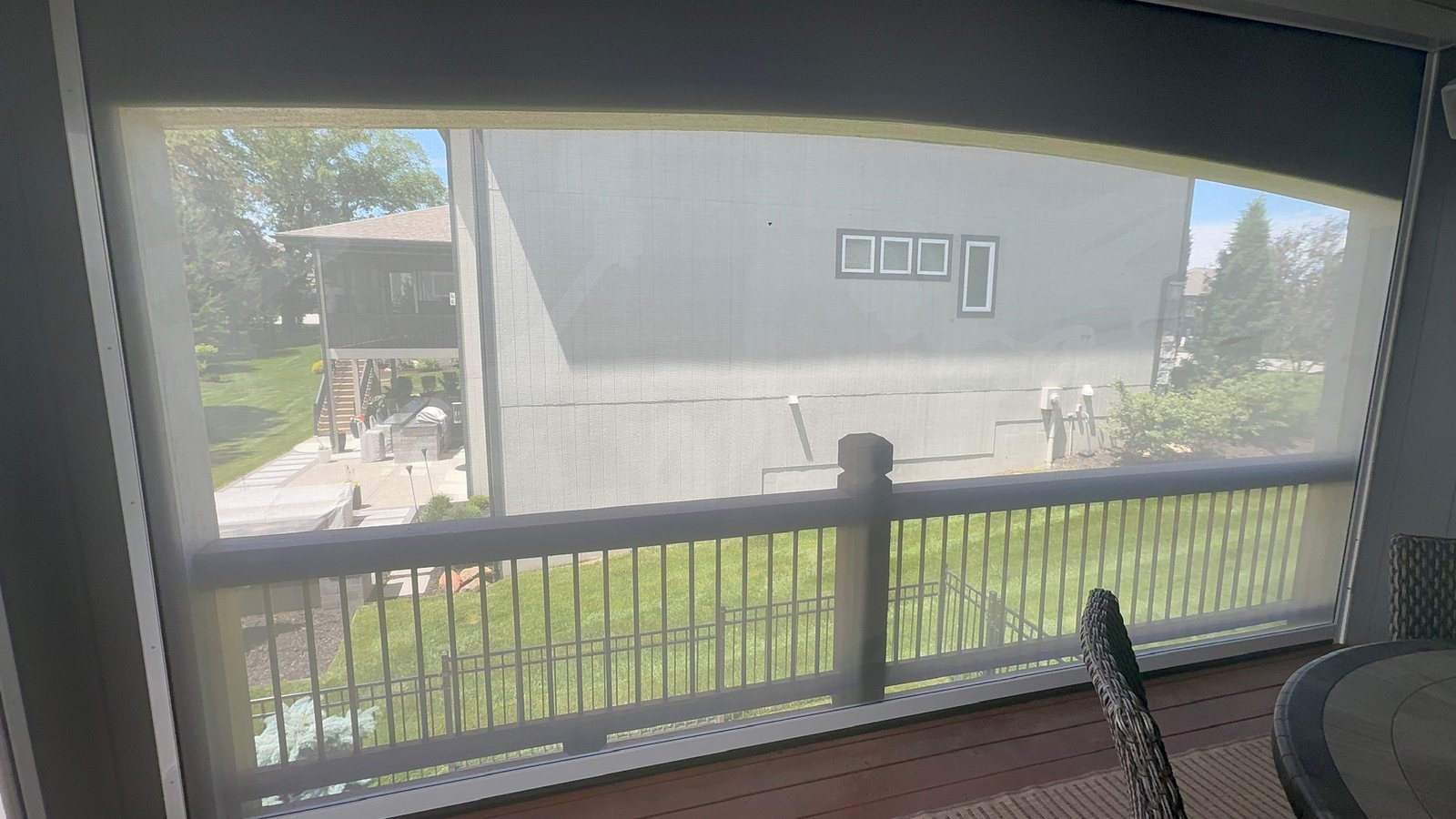
Openness is the share of the weave that is actually open. The trade is one-dimensional: the more you can see out, the more sun gets in. So we choose it per wall, not per house:
- Blackout in primary bedrooms and any room with a screen meant for movies.
- Tighter weaves on south and west glass, where a Kansas City afternoon does real work.
- Opener weaves on the north, where there is no glare to fight and the view is the point.
Two shades in one room can carry different fabrics if they face different ways. And because fabric sets the roll size, which sets the pocket, it is not a decision to leave for last.
4. Inside or outside the frame, and where it stops
Mounted inside the frame, a shade looks built in, but it needs enough depth in the jamb, and every roller leaves a thin gap of light at each side. In a living room nobody notices. In a bedroom or a theater that gap is the whole point of the shade, so the line says outside mount or side channels, decided while the opening is still being detailed.
The other half of this line is where the shade stops. A bank of shades across one wall should close to a single hem line even when the windows are different sizes. That is set when we commission the shades, not bought as a feature. We order from measurements of the finished openings, after trim, not from the drawings.
5. What moves it, and when
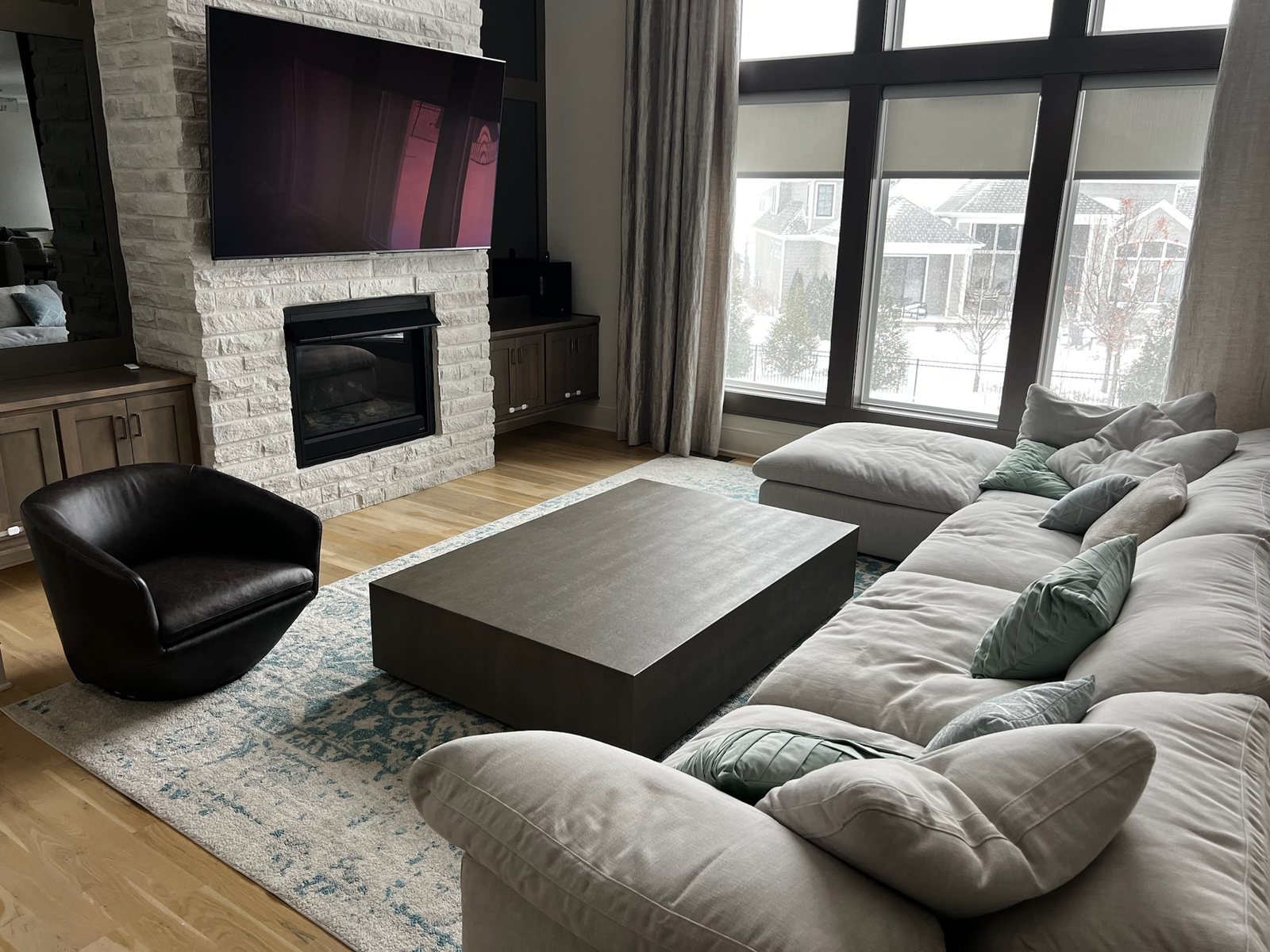
Lutron shades run on the same Lutron HomeWorks processor as the lighting, so a scene sets light and shade in one instruction. Movie dims the room and closes the west wall. Goodnight closes everything and leaves the bedside lamps. The astronomical clock closes the west glass ahead of the afternoon sun instead of after someone notices the heat. If the house runs Control4 or Crestron, it calls the same scenes. (Each of these decisions in detail, on our motorized shades page.)
The order it happens in a new build
- Design: the schedule, window by window, while the drawings can still change.
- Framing: pockets framed to the schedule’s sizes.
- Rough-in: a low-voltage run to the head of every window that gets a wired drive.
- Trim and paint: we measure the finished openings, and the order goes in from those numbers.
- Install: shades hung, limits set, hems aligned.
- Commissioning: scenes, keypads and the clock, programmed on the lighting system.
In a finished house the order is shorter and starts with a survey: window by window, which openings a wire can reach through an attic, a soffit or a closet stack, which need a fascia instead of a pocket, and which are honestly battery windows. You get that map before anyone quotes fabric. Older Lutron Sivoia QED shades often have a factory upgrade path onto current Lutron Sivoia QS drives, so ask before you accept a replacement quote. (Lutron service, for shades already on the wall.)
What it costs
It depends on how many windows move, their sizes, the fabric, and wired versus battery for each, which is exactly what the schedule writes down. We give a fixed price after a no-cost site walk, not a range by email. (What drives the cost of motorized shades.)
What you get from us
- The schedule, one line per window, before anything is priced or ordered.
- A fixed price from that schedule, after a no-cost site walk.
- A warranty: five years on our workmanship, from the date of the final invoice. The warranty page is the whole of the terms.
About IntegrateIT. We have integrated hundreds of homes across the Kansas City metro since 2021, from our Control4 Certified Showroom in Overland Park. Control4 Platinum Dealer · Crestron Elite Partner · Lutron Certified Dealer, HomeWorks Certified and Ketra Certified · HTA Certified · CEDIA member.
— Daniel Alon, co-founder, IntegrateIT. Overland Park, KS. October 2026.
Further reading
Where to go next if this article gave you the framework but you want the brand- or install-specific depth.
- Service: motorized shades · Kansas CityWired or battery, pocket or fascia, fabric openness and scenes, each in detail.→
- Cost guide: motorized shadesWhat drives the number: window count, size, fabric and the drive.→
- Article: the smart home pre-wire checklistPower to every window head, and the rest of what to pull before drywall.→
- Lutron HomeWorks · Kansas CityThe processor the shades and the lighting share.→
- Service: Lutron serviceShades that already exist and have stopped behaving.→
- Our warrantyFive years of workmanship from the final invoice.→
Planning shades?
Book a no-cost site walk. Every window gets its line in the schedule before anything is priced.
Call (913) 804-7575 Text a photo of the windows Plan a site walk
Questions
Questions we hear
When should motorized shades be planned in a new build?
Before the ceiling is framed. The shade schedule sets the pocket sizes, and the pockets have to be framed to them. The low-voltage run to each window head goes in at rough-in. Fabric and color can still change later; the pockets and the wire cannot.
What is a shade schedule?
A list with one line for every window: whether the shade is wired or battery, where the roll goes (a pocket, a fascia or exposed hardware), the fabric and its openness, how it mounts, and which scenes move it. It is written before anything is priced, and it is what gets ordered.
Inside mount or outside mount?
Inside the frame looks cleaner and needs enough depth in the jamb for the roller. It also leaves a thin gap of light at each side. Where that gap matters, in a bedroom or a theater, the answer is an outside mount that overlaps the frame, or side channels that close the gap.
My windows are different heights. Can the shades still close to one line?
Yes. Holding a bank of shades on one hem line across openings of different sizes is set during commissioning, not bought as a feature. We set the limits so the hems stop together.
Do motorized shades work with my Control4 or Crestron system?
Yes. Lutron shades run on the same Lutron HomeWorks processor as the lighting, and Control4 or Crestron on top calls the same scenes. One press can dim the room and close the west wall together.
How do I get a shade schedule for my house?
Book a no-cost site walk: call or text (913) 804-7575, or plan it online at integrateit.tech/estimate/. We measure every opening, write the schedule, and give you a fixed price from it.
Begin
Tell us about your home.
We walk the rooms, learn how you live, and come back with one fixed price — not a range by email.